
Starting a dog breeding business from home in Ontario is not something to treat as a quick side hustle. It involves animal welfare, veterinary care, record keeping, legal responsibility, emergency planning, and a serious commitment to the health of both the mother dog and puppies.
Quick answer: before breeding dogs in Ontario, you should check provincial animal welfare rules, local municipal bylaws, zoning rules, business requirements, veterinary care needs, and responsible breeding standards. You should also be financially prepared for emergencies, C-sections, sick puppies, rejected litters, and unsold puppies.
This article is general information only. It is not legal, veterinary, or business advice. Always confirm current rules with your municipality, a veterinarian, and the appropriate Ontario authorities before breeding dogs.
Can you start a dog breeding business from home in Ontario?
Possibly, but only if your setup follows the rules where you live and protects animal welfare. Ontario has animal welfare laws, and municipalities may also have bylaws for dogs, kennels, noise, zoning, maximum pet limits, licensing, and home-based businesses.
Do not assume you can breed dogs from home just because you own a female dog. Breeding comes with legal and ethical responsibility.
Step 1: Check Ontario animal welfare rules
Ontario’s animal welfare rules are designed to protect animals from distress, neglect, and harmful practices. Anyone breeding dogs must understand care standards, housing, cleanliness, health, and humane treatment.
You should review Ontario animal welfare information and speak with your veterinarian before planning a litter.
Step 2: Check your city bylaws and zoning
Your municipality may have rules about how many dogs you can keep, whether a kennel licence is required, whether breeding is allowed in your area, and whether a home-based business is permitted.
Call your city or town before breeding. Ask about:
- Dog limits per household
- Kennel licence requirements
- Business licence requirements
- Zoning restrictions
- Noise complaints
- Waste disposal rules
- Animal control inspections
Step 3: Choose breeding dogs responsibly
Responsible breeding starts with healthy, temperamentally stable dogs. You should not breed dogs with serious inherited health problems, unstable behaviour, untreated medical issues, or poor structure that may harm their quality of life.
Depending on the breed, responsible breeders may use health testing, genetic screening, orthopedic evaluations, eye checks, cardiac checks, or other breed-specific veterinary advice.
Step 4: Build a proper home setup
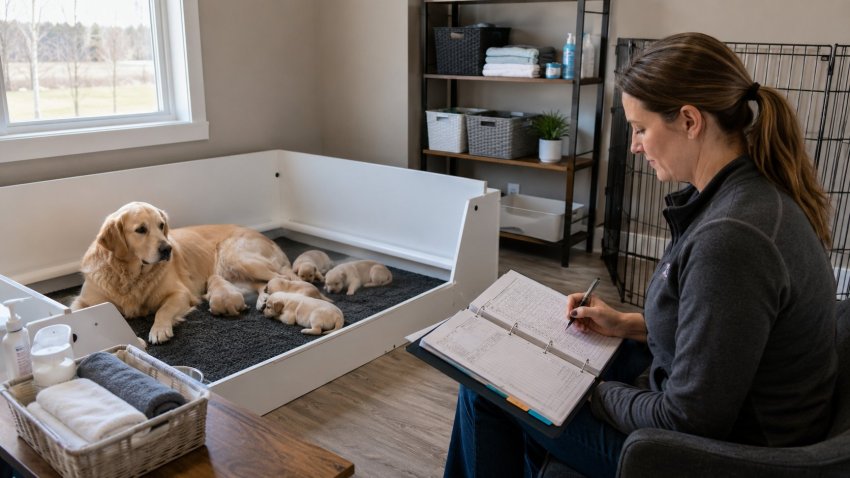
A responsible breeding setup needs more than a spare room. You need safe, clean, quiet, and temperature-controlled space for the mother and puppies.
Your setup may need:
- A clean whelping area
- Washable flooring and bedding
- Safe heating or cooling
- Separate space away from household stress
- Sanitation supplies
- Emergency transport plan
- Secure outdoor access
- Space for socialization and puppy development
Step 5: Plan your costs before breeding
Dog breeding can become expensive quickly. A healthy litter may still cost more than expected, and emergencies can erase profit.
| Expense | Why it matters |
|---|---|
| Veterinary exams | Health checks before, during, and after pregnancy |
| Health testing | Reduces risk of passing serious inherited conditions |
| Emergency care | C-sections and sick puppies can be costly |
| Food and supplements | Mother and puppies need proper nutrition |
| Cleaning supplies | Sanitation helps prevent illness |
| Microchips and vaccines | Often expected before puppies go home |
| Contracts and records | Protects buyer, breeder, and puppy welfare |
Step 6: Work with a veterinarian
A veterinarian should be part of your breeding plan before pregnancy. Ask about health testing, pregnancy care, nutrition, emergency signs, puppy exams, vaccinations, deworming, and when puppies can safely go to new homes.
If you cannot afford regular and emergency vet care, you are not ready to breed.
Step 7: Screen puppy buyers carefully
A responsible breeder does not sell puppies to anyone who can pay. Puppy buyers should understand the breed, costs, training needs, grooming, health risks, and long-term commitment.
Use a clear buyer application and contract. Be ready to say no if a home is not suitable.
Step 8: Keep records
Keep records for each dog and puppy. This may include vet visits, vaccines, deworming, microchip numbers, health testing, buyer information, contracts, and care instructions.
Good records help protect your puppies and show that you are operating responsibly.
When you should not breed dogs
Do not breed dogs if:
- You are only doing it for quick money.
- You cannot afford emergency veterinary care.
- You do not understand the breed’s health risks.
- Your dog has serious behaviour or health problems.
- You do not have enough space.
- Your municipality does not allow it.
- You cannot take back or support puppies if buyers have problems.
Better alternatives to starting a breeding business
If you love dogs but are not ready to breed, consider dog grooming, pet sitting, dog walking, training support, fostering, rescue volunteering, or pet content creation. These options can still let you work with dogs without creating more puppies.
Final thoughts
A dog breeding business from home in Ontario requires planning, money, knowledge, and strong ethics. It should never be treated as an easy income idea.
If you want to move forward, start with your municipality, your veterinarian, Ontario animal welfare rules, and a full cost plan. Responsible breeding puts the dogs first.
FAQs About Starting a Dog Breeding Business in Ontario
Do I need a licence to breed dogs in Ontario?
It depends on your municipality, number of dogs, kennel setup, zoning, and business activity. Contact your city or town before breeding.
Can I breed dogs from home?
Possibly, but your home setup must follow local bylaws and animal welfare requirements. Some areas may restrict kennels or home-based breeding.
Is dog breeding profitable?
It can be costly and risky. Vet bills, emergencies, food, supplies, testing, and unsold puppies can reduce or eliminate profit.
What is responsible dog breeding?
Responsible breeding focuses on health, temperament, welfare, proper vet care, buyer screening, records, and long-term support for puppies.
Should I breed my dog once before spaying?
Do not breed just because of that idea. Speak with your veterinarian about your dog’s health and the safest option.
What should puppies have before going home?
Ask your vet, but puppies commonly need health checks, age-appropriate vaccines, deworming, records, and clear care instructions before going to new owners.