
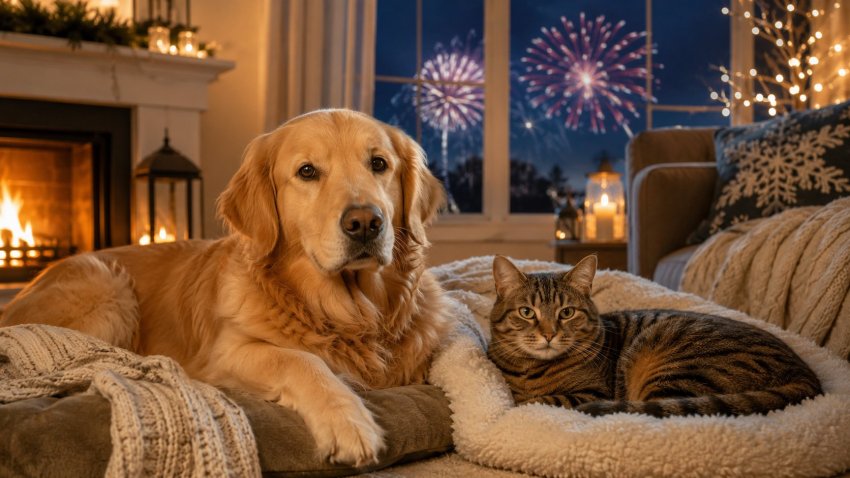
New Year’s Eve can be exciting for people, but it can be stressful and confusing for pets. Loud fireworks, cheering, music, guests, food smells, and doors opening often can make dogs and cats feel unsafe.
Some pets bark, hide, shake, pace, pant, or try to escape. Others may act normal at first and become nervous once the noise starts. The best thing you can do is prepare before the celebration begins.
This guide shares simple New Year fireworks safety tips for dogs and cats.
This article is for general information only. It is not a replacement for veterinary advice. If your pet has severe anxiety, panic, health issues, or sudden behavior changes, speak with your veterinarian.
Why Fireworks Can Scare Pets
Dogs and cats do not understand fireworks the way people do. To them, the loud bangs, bright flashes, and shaking sounds may feel like danger.
Fireworks can be difficult for pets because they are:
- Loud
- Sudden
- Unpredictable
- Repeated over several hours
- Often paired with busy homes and guests
Even pets who are usually calm can become nervous during New Year celebrations.
Keep Pets Indoors Before Fireworks Start
Do not wait until the fireworks are already loud. Bring dogs and cats inside earlier in the evening.
For dogs, finish walks and bathroom breaks before the loudest part of the night. For cats, make sure they are indoors and not able to slip out through open doors.
If you have guests coming over, remind everyone to keep doors closed. A scared pet may run outside quickly if a door is left open.
Set Up a Quiet Safe Space
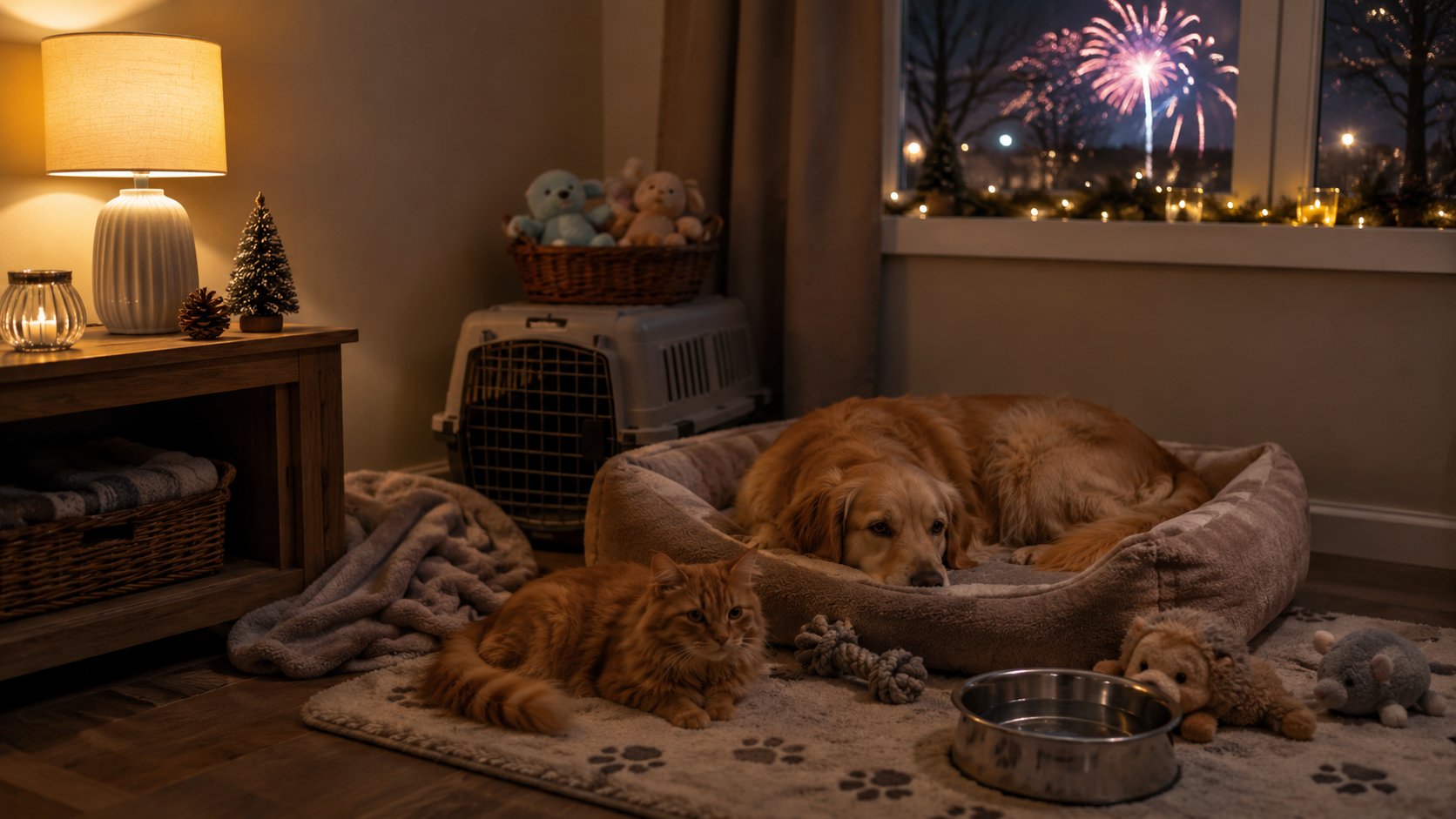
A quiet room can make a big difference. Choose an interior room if possible, away from windows and the front door.
Add:
- Your pet’s bed or blanket
- Fresh water
- Favorite toys
- A litter box for cats
- A safe chew or puzzle toy for dogs
- Soft music, white noise, or a fan
- Dim lighting
Let your pet use the room before the fireworks begin. Do not lock them away suddenly if they are not used to it. The goal is to create a comfortable space, not a punishment area.
If your pet also gets nervous around visitors, read our guide on how to keep pets calm during Christmas guests and parties for more simple ways to create a safe space.
Update ID Tags and Microchip Info
Fireworks can cause pets to panic and escape. Before New Year’s Eve, check that your pet’s ID tag is readable and current.
Make sure the tag includes your phone number. If your pet is microchipped, confirm that your contact details are updated with the microchip company.
Even indoor cats should have identification if possible. Many lost-pet situations happen when a normally indoor pet slips outside during a noisy event.
Do Not Bring Pets to Fireworks Events
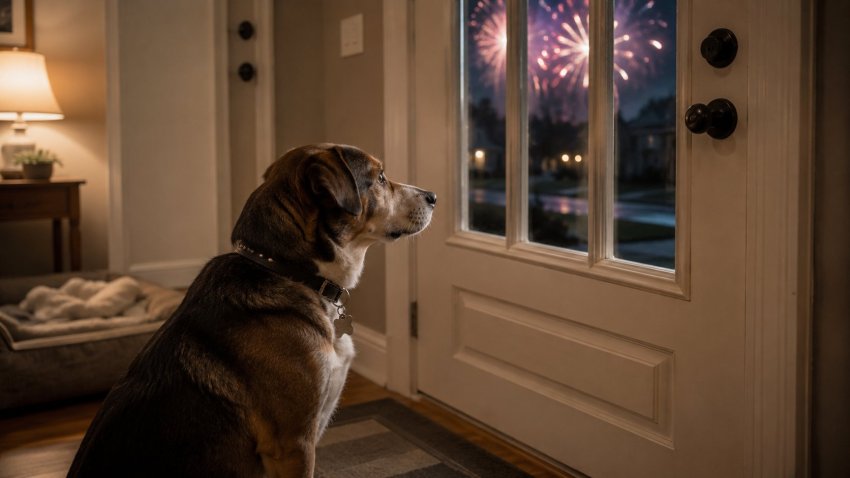
A fireworks event may seem fun, but it is usually not a safe place for pets. The noise, crowds, flashing lights, traffic, and unfamiliar smells can be overwhelming.
Leave pets at home in a secure indoor space. If you are going out, check on them before you leave and return as soon as you reasonably can.
Watch for Stress Signals
Pets may show stress in different ways.
Dogs may:
- Bark or whine
- Pant when not hot
- Shake or tremble
- Pace around the room
- Hide
- Drool
- Refuse food
- Try to escape
- Cling to their owner
Cats may:
- Hide under furniture
- Flatten their ears
- Swish their tail
- Refuse food
- Avoid touch
- Hiss or growl
- Stay frozen in one spot
- Try to run into closets or small spaces
If your pet wants to hide, let them hide somewhere safe. Do not drag them out to “comfort” them if that makes them more scared.
Avoid Unsafe Calming Methods
Do not give your pet human medication, alcohol, cannabis products, or random calming supplements. These can be dangerous.
If your pet has severe fireworks anxiety, talk to your veterinarian before the holiday. Your vet can suggest safe options based on your pet’s age, health, and history.
If medication is prescribed, follow your vet’s instructions exactly. Do not share one pet’s medication with another animal.
Keep Party Food and Drinks Away
New Year parties often include food and drinks that pets should not have. Keep these away from dogs and cats:
- Alcohol
- Chocolate
- Grapes and raisins
- Onion and garlic foods
- Cooked bones
- Fatty leftovers
- Candy and gum
- Coffee drinks
- Salty snacks
Ask guests not to feed your pets. If you want your pet to have a treat, use their regular pet-safe treats.
You can also check our guide on holiday foods that are dangerous for dogs and cats before planning snacks around pets.
Keep Fireworks and Glow Items Away
Some pets chew things they should not. Keep fireworks, sparklers, firework packaging, glow sticks, glow jewelry, matches, and lighter fluid away from pets.
After fireworks, check your yard or walkway for leftover debris before letting your dog outside. Firework pieces may smell interesting and can be unsafe if chewed or swallowed.
If your home is still decorated for the holidays, our guide on pet-safe Christmas decorations can help you spot other seasonal risks too.
Help Your Pet Settle After Midnight
After the fireworks stop, your pet may still need time to calm down. Keep the environment quiet and predictable.
Offer water, a bathroom break if safe, and calm attention. Do not force play or affection. Some pets may want to sleep, while others may stay alert for a while.
Final Thoughts
New Year fireworks can be stressful for dogs and cats, but preparation helps. Keep pets indoors, set up a quiet safe space, update ID tags, manage food risks, and avoid unsafe calming methods.
A calm New Year for your pet starts before the noise begins.