
The holidays are full of good food, family visits, and busy kitchens. For pets, that can also mean more chances to eat something they should not have. Dogs may beg under the table. Cats may jump on counters. Guests may offer “just a small bite” without realizing that some human foods can be risky for pets.
This guide covers common holiday foods that can be dangerous for dogs and cats, simple ways to prevent accidents, and what to do if your pet eats something suspicious.
This article is for general information only. If your pet eats something toxic, seems sick, or you are unsure what happened, contact your veterinarian or a pet poison helpline right away.
Why Holiday Food Can Be Risky for Pets
Holiday meals are different from normal everyday food. They are often richer, fattier, sweeter, saltier, and more heavily seasoned. Even foods that seem harmless to people can upset a pet’s stomach or cause a more serious reaction.
The biggest risks usually come from:
- Toxic ingredients
- Fatty foods
- Cooked bones
- Alcohol
- Desserts
- Seasonings like onion and garlic
- Guests feeding pets without asking
The safest rule is simple: keep your pet on their regular food during holiday celebrations. If you want to include them, offer a pet-safe treat instead.
Chocolate and Holiday Desserts
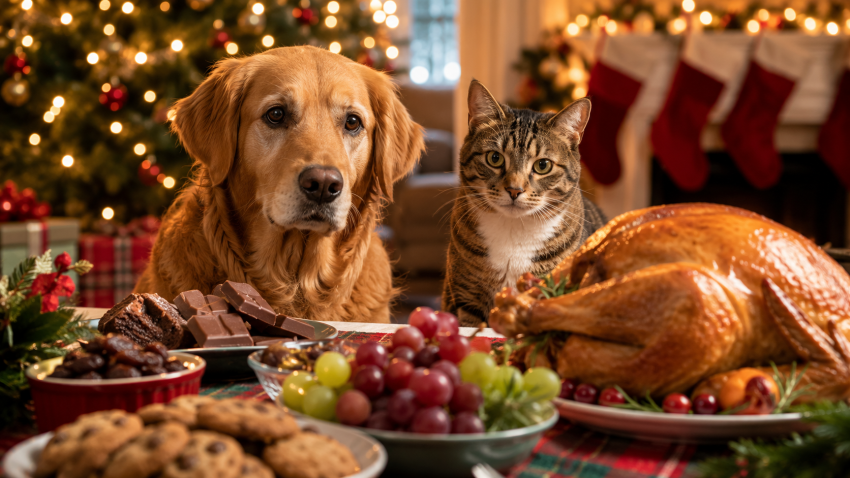
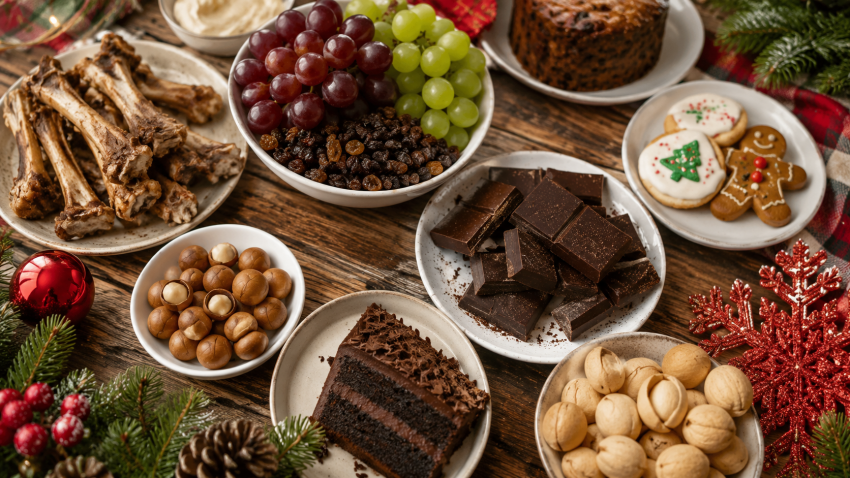
Chocolate is one of the most common holiday food dangers for pets. It can be especially risky for dogs because many dogs will eat a large amount quickly if they find it.
Holiday desserts may also include other ingredients that are unsafe for pets, such as artificial sweeteners, raisins, nuts, coffee, or alcohol. Cookies, cakes, fudge, brownies, and chocolate-covered treats should always be kept away from dogs and cats.
Do not leave dessert trays on low tables. A curious dog can grab food in seconds, and some cats are very good at opening boxes or getting into bags.
Grapes and Raisins
Grapes and raisins can be dangerous for dogs and should not be offered as treats. They may appear in fruitcake, stuffing, baked goods, snack trays, and holiday desserts.
The tricky part is that some people do not think of raisins as dangerous because they look small and harmless. During the holidays, make sure guests know not to feed grapes, raisins, or raisin-filled desserts to your dog.
Cats are usually less likely to eat these foods, but they should still be kept away from them.
Onion, Garlic, and Heavy Seasoning
Many holiday dishes contain onion, garlic, chives, or related seasonings. These ingredients may be found in stuffing, gravy, mashed potatoes, casseroles, sauces, meat dishes, soups, and dips.
Do not give your pet food from the table unless you are completely sure it is plain and pet-safe. Even a small piece of meat may have been cooked with garlic, onion powder, butter, salt, or spices.
Plain cooked turkey without bones, skin, gravy, or seasoning may be acceptable for some pets in a very small amount, but it is still better to keep holiday meals separate from pet food.
Cooked Bones
Cooked turkey, chicken, ham, and rib bones are not safe for pets. Cooked bones can break into sharp pieces and may injure the mouth, throat, stomach, or intestines.
Do not give pets bones from holiday meals. Also make sure garbage bags are secured after dinner. Many food accidents happen after the meal is over, when a dog finds the trash.
A good rule is to take bones, food scraps, foil, and strings from meat packaging directly to a secure outdoor garbage bin or a locked trash container.
Fatty Foods and Pancreatitis Risk
Holiday foods are often high in fat. Turkey skin, gravy, butter, bacon, ham, cheese, and creamy dishes can upset a pet’s stomach. In some pets, very fatty foods may contribute to more serious digestive problems.
Signs of a problem may include vomiting, diarrhea, loss of appetite, stomach pain, tiredness, or unusual behavior. If your pet seems uncomfortable after eating rich food, call your veterinarian.
It is better to avoid sharing fatty table scraps completely, especially with small dogs, senior pets, pets with sensitive stomachs, or pets with a history of digestive issues.
Alcohol and Holiday Drinks
Alcohol should never be given to pets. During parties, drinks may be left on coffee tables, side tables, or the floor. Some pets may lick from glasses or spilled drinks.
Holiday drinks may also contain cream, chocolate, coffee, or sweeteners, which can add more risk. Keep drinks out of reach and clean spills quickly.
Ask guests to avoid leaving cups where pets can access them.
Candy, Gum, and Sugar-Free Foods
Sugar-free gum, mints, baked goods, and some candies may contain xylitol, which is dangerous for dogs. These items are easy to overlook because they may be in purses, coat pockets, gift bags, or stockings.
During holiday gatherings, keep bags and coats in a room pets cannot access. A dog may chew through a purse or backpack if it smells snacks inside.
What About Cats?
Cats are usually more selective than dogs, but they can still get into trouble. Cats may lick cream, butter, gravy, or sauces. They may chew ribbon, string, food packaging, or plants. They may also jump onto counters and taste food when no one is watching.
For cat owners, the main focus should be keeping counters clear, covering food, avoiding toxic plants, and making sure holiday leftovers are stored quickly.
How to Keep Pets Safe During Holiday Meals
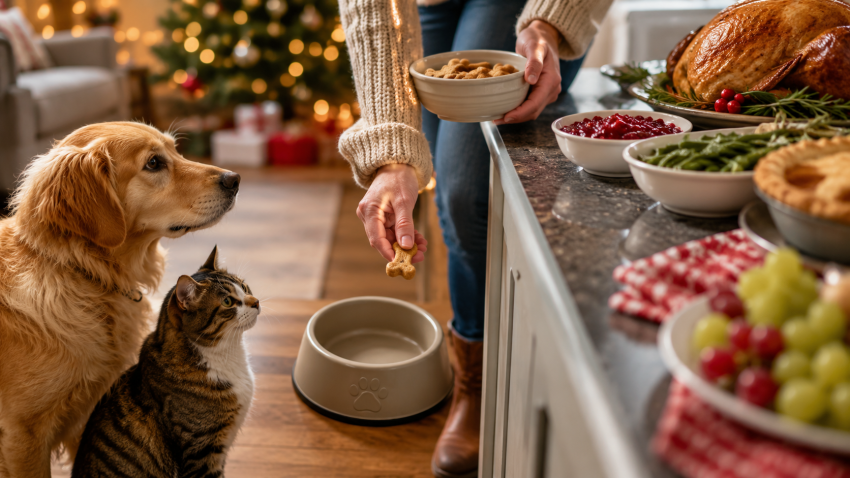
The easiest way to prevent problems is to plan before guests arrive.
Here are practical steps:
- Feed your pet their regular meal before guests come over.
- Keep pets out of the kitchen during cooking.
- Do not leave food unattended on low tables.
- Tell guests not to feed your pet.
- Keep trash covered and secure.
- Store desserts and candy in closed cabinets.
- Keep purses and bags away from pets.
- Prepare pet-safe treats in advance.
- Watch children around pets and food.
If your pet gets anxious or excited around guests, it may be better to let them relax in a quiet room with water, bedding, toys, and familiar sounds.
Pet-Safe Holiday Treat Ideas
If you want your pet to feel included, choose simple and safe options.
For dogs, you can offer a small amount of plain cooked turkey with no bones, skin, gravy, or seasoning if your dog normally tolerates it. You can also use their regular treats or a small spoon of plain pumpkin if it is already part of their diet.
For cats, stick with their normal cat treats or a small amount of plain cooked meat with no seasoning if appropriate.
Do not introduce too many new foods at once. Holidays are already busy, and a sudden diet change can lead to stomach upset.
What to Do If Your Pet Eats Something Unsafe
If your pet eats something unsafe, do not wait for symptoms to appear. Some problems are easier to manage when handled quickly.
Take these steps:
- Move the food away from your pet.
- Check what they ate and estimate the amount.
- Save the package or ingredient list if available.
- Call your veterinarian, emergency vet, or pet poison helpline.
- Do not try home treatments unless a professional tells you to.
Do not force your pet to vomit unless your veterinarian or poison-control professional specifically tells you to do so.
Final Thoughts
Holiday food is one of the easiest pet risks to prevent. Most problems happen when food is left out, guests feed pets without asking, or trash is not secured.
Keep your pet’s routine simple, avoid table scraps, and prepare safe treats ahead of time. A little planning can help your dog or cat enjoy the holiday season safely while everyone else enjoys the meal.