
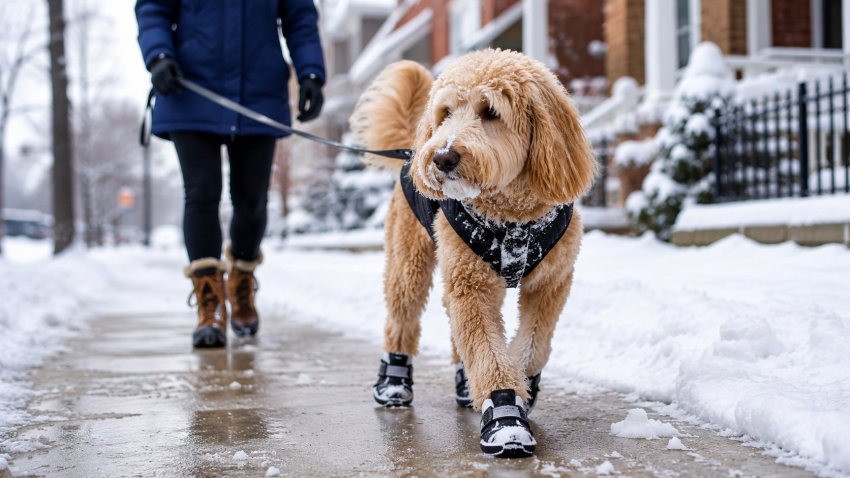
Winter walks can be tough on a dog’s paws. Snow may look soft, but sidewalks can hide ice, sharp frozen edges, road salt, and de-icing chemicals. These can irritate paw pads and make walking uncomfortable.
Good winter paw care does not need to be complicated. A few small habits before and after walks can help protect your dog’s feet all season.
This article is for general information only. If your dog’s paws are cracked, bleeding, swollen, painful, or your dog refuses to walk, contact your veterinarian.
You can also use our pet care checklist to plan paw protection, grooming, winter safety, and travel items for your dog.
Why Dog Paws Need Extra Care in Winter
Dog paws are strong, but they are not indestructible. Winter adds several challenges at once:
- Cold pavement
- Ice
- Snow buildup
- Road salt
- De-icing chemicals
- Dry air
- Cracked paw pads
- Slippery surfaces
Some dogs handle winter sidewalks well. Others start lifting their paws after only a few minutes outside.
If you are unsure whether the weather itself is safe, start with our guide on how cold is too cold for dogs in Canada.
Watch for Signs of Paw Discomfort
Your dog may not always cry or bark when their paws hurt. Watch for subtle signs during and after walks.
Signs may include:
- Lifting one paw
- Limping
- Stopping suddenly
- Biting or licking paws
- Refusing to walk
- Walking slower than usual
- Redness between toes
- Cracked or rough paw pads
- Ice stuck in fur between toes
If you notice these signs, pause the walk and check your dog’s paws.
Wipe Paws After Every Winter Walk
One of the easiest paw care habits is wiping your dog’s paws when you come inside.
Use a damp cloth, pet-safe wipe, or towel to clean:
- Paw pads
- Between toes
- Around nails
- Lower legs
- Belly area if salt splashed up
This helps remove salt, grit, and chemicals before your dog licks them.
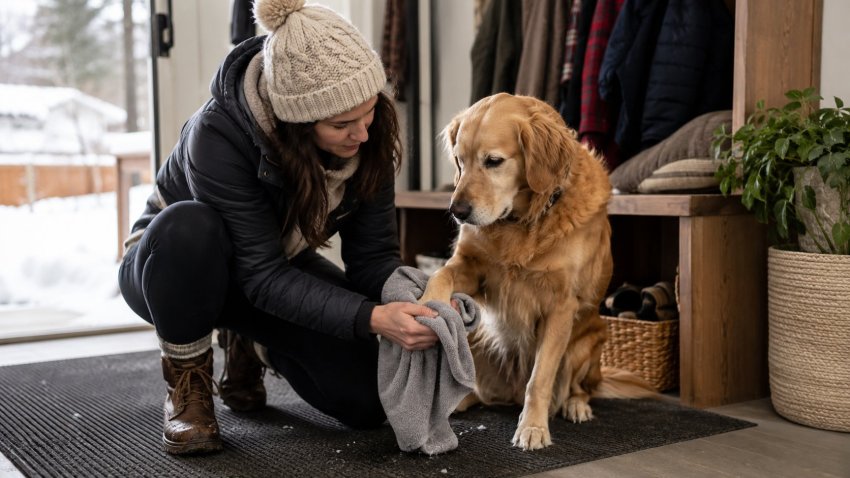
Keep a towel near the door so it becomes part of your winter routine.
Check Between the Toes
Snow and ice can collect between a dog’s toes, especially if they have longer fur around the paws. These ice balls can be painful and may cause your dog to limp or stop walking.
After each walk, gently check between the toes. If you find ice, use your fingers or a warm damp cloth to loosen it. Do not pull hard.
If this happens often, ask a groomer or vet whether trimming the paw fur would help.
Consider Dog Boots
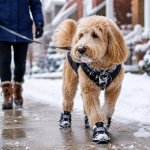
Dog boots can help protect paws from salt, ice, and cold pavement. They are especially useful for dogs who lift their paws often or walk in heavily salted areas.
When choosing boots, look for:
- Good fit
- Flexible sole
- Secure straps
- Non-slip bottom
- Comfortable movement
- Easy cleaning
Some dogs dislike boots at first. Let your dog wear them indoors for short periods before using them outside. Reward calm steps and keep practice sessions light.
If you are also choosing coats or sweaters, our guide on Canadian winter fashion for pets may help.
Try Paw Balm
If your dog will not wear boots, paw balm may help create a protective layer on the paw pads.
Apply it before walks according to the product directions. Wipe paws afterward to remove salt and debris.
Use only products made for pets. Do not use random lotions, medicated creams, or human products unless your veterinarian says they are safe.
Avoid Heavily Salted Areas
Road salt is common in winter, but it can be rough on paws. It may sting, dry out paw pads, and get trapped between toes.
When possible:
- Walk on less salted paths.
- Choose snow-covered grass instead of salted pavement.
- Avoid puddles near roads.
- Keep walks shorter after heavy salting.
- Use booties or paw balm for protection.
If your dog starts licking paws intensely after a walk, clean the paws and watch for irritation.
Keep Nails Trimmed
Long nails can make winter walking harder. They may reduce traction and change how the paw touches the ground.
Regular nail trimming can help your dog walk more comfortably, especially on icy surfaces. If you are not comfortable trimming nails yourself, ask a groomer or vet clinic for help.
Be Careful on Ice
Slips and falls can happen quickly, especially for senior dogs or dogs with joint issues.
Avoid icy sidewalks when possible. Walk slowly, use a leash, and choose safer surfaces. If the sidewalk looks dangerous for you, it may also be dangerous for your dog.
This is especially important for older dogs, so also see our tips for keeping senior pets comfortable in cold weather.
Make a Winter Paw Station
Set up a small area by the door with:
- Towel
- Paw wipes
- Paw balm
- Dog boots
- Leash
- Small treats
- Waste bags
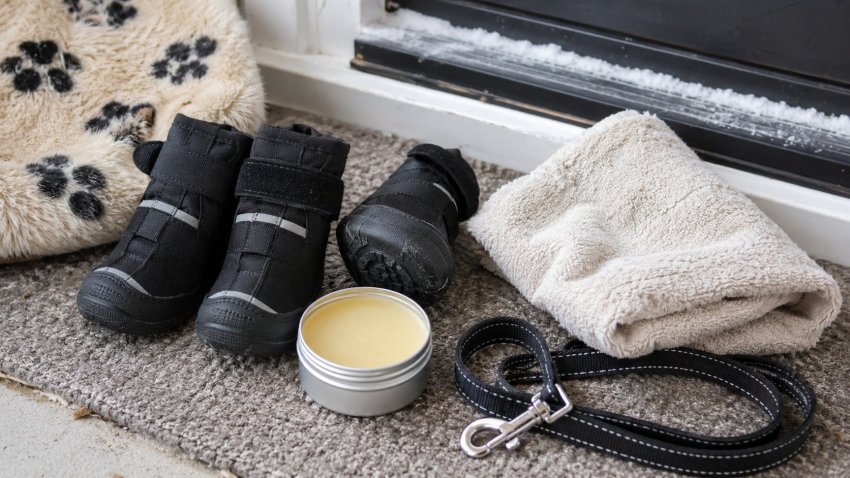
This makes winter paw care easier to repeat every day.
When to Call a Veterinarian
Call your veterinarian if your dog has:
- Bleeding paw pads
- Deep cracks
- Swelling
- Limping that continues
- Signs of pain
- A cut or wound
- Redness that does not improve
- Heavy licking or chewing
- Trouble standing or walking
Do not ignore paw injuries. Small problems can become more painful if your dog keeps walking on them.
Final Thoughts
Winter paw care is one of the simplest ways to protect your dog during cold weather. Wipe paws after walks, check between toes, use boots or balm when needed, and avoid heavily salted or icy areas.
Your dog’s paws carry them through every winter walk. A few extra minutes of care can make those walks safer and more comfortable.