
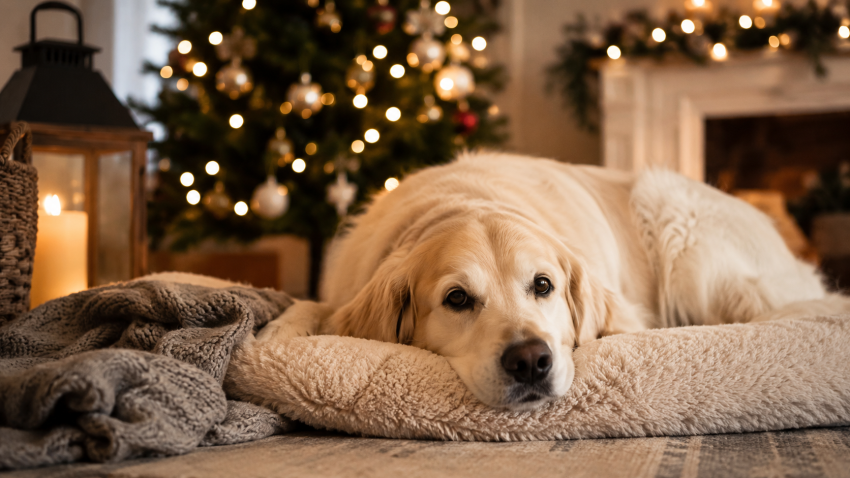
Christmas can be exciting for people, but it can feel overwhelming for pets. The doorbell rings more often. New people enter the home. Furniture may be moved. Food smells are everywhere. Music, laughter, children, decorations, and noise can all change your pet’s normal routine.
Some pets enjoy the attention. Others hide, bark, pace, jump, scratch, or become stressed.
The good news is that a little planning can make holiday gatherings easier for both pets and people. This guide explains how to help dogs and cats stay calm when guests visit during Christmas.
This article is for general information only. If your pet has severe anxiety, aggression, panic, or sudden behavior changes, speak with your veterinarian or a qualified pet behavior professional.
Understand Why Pets Get Stressed During Holidays
Pets often feel safest when life is predictable. Holiday gatherings can change almost everything at once.
Common stress triggers include:
- Doorbells and knocking
- Loud voices
- Children running
- New smells
- Unfamiliar people
- Guests trying to touch them
- Food on tables
- Decorations and moved furniture
- Less quiet time
- Changes to feeding or walking schedules
A dog may bark because they are excited, protective, nervous, or overstimulated. A cat may hide because the home feels too loud or unfamiliar.
Instead of forcing your pet to “join the fun,” give them options and space.
Create a Quiet Room Before Guests Arrive
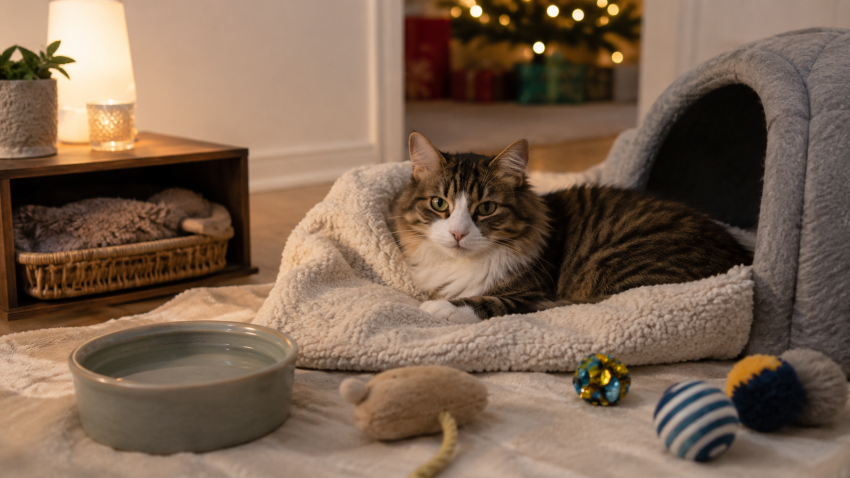
One of the best ways to reduce stress is to set up a quiet room before the party starts.
Choose a bedroom, office, laundry room, or calm area away from the main gathering. Add familiar items such as:
- Pet bed or blanket
- Water bowl
- Favorite toys
- Litter box for cats
- Safe chew or puzzle toy for dogs
- Low background noise
- Dim lighting if helpful
Let your pet explore the room before guests arrive. Do not wait until they are already stressed.
For some pets, the quiet room should be available the whole time. For others, it can be a break area when the house gets too busy.
Keep Your Pet’s Routine as Normal as Possible
Routine helps pets feel secure. On party days, try to keep normal feeding, walking, play, and bathroom schedules.
For dogs, a walk before guests arrive can help reduce extra energy. For cats, a calm play session earlier in the day may help them settle.
Avoid skipping meals, delaying bathroom breaks, or changing everything at once. A tired, hungry, or overstimulated pet is more likely to struggle during a gathering.
Manage the Front Door
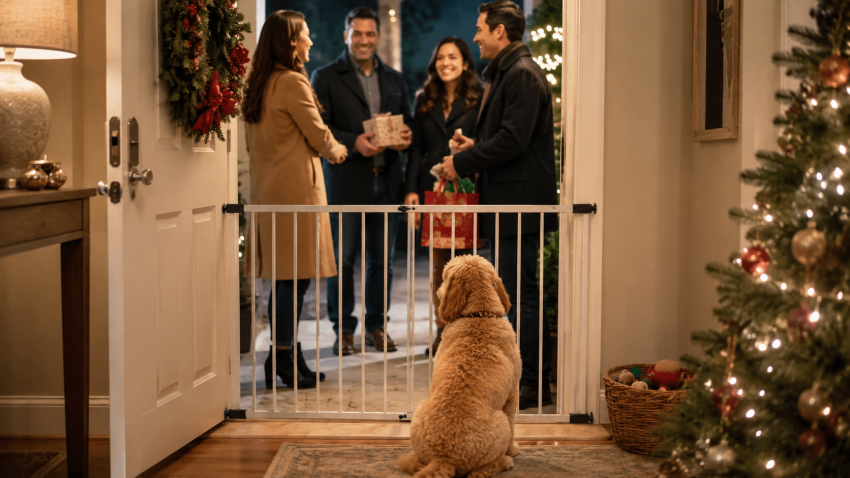
The front door can be one of the most stressful parts of a holiday party. Guests come in and out, the doorbell rings, and pets may try to escape.
To make the entrance safer:
- Keep dogs on a leash or behind a gate during arrivals.
- Place cats in a secure room before guests arrive.
- Ask guests not to crowd your pet at the door.
- Watch for open doors during coat removal.
- Make sure ID tags and microchip information are up to date.
Even a pet who normally stays inside may bolt if startled by noise or unfamiliar people.
Tell Guests the Pet Rules
Guests often mean well, but they may not know your pet’s needs. Before or as they arrive, explain simple rules.
For example:
- Please do not feed the pets.
- Let the cat come to you if she wants attention.
- Do not pick up the dog.
- Keep bedroom doors closed.
- Do not leave plates or drinks on the floor.
- Please do not open the quiet room door.
This is especially important with children. Kids may run, hug, chase, or feed pets without realizing they are causing stress.
Watch Your Pet’s Body Language
Pets often show stress before they react strongly. Learning early signs can help you step in before things get worse.
Signs of stress in dogs may include:
- Panting when not hot
- Pacing
- Barking
- Whining
- Lip licking
- Yawning
- Tucked tail
- Hiding
- Jumping more than usual
- Growling
Signs of stress in cats may include:
- Hiding
- Flattened ears
- Swishing tail
- Dilated pupils
- Hissing
- Avoiding touch
- Not eating
- Overgrooming
- Trying to escape
If your pet shows stress, give them a break. Do not punish them for being overwhelmed.
Avoid Forcing Greetings
Some pets do not want to meet every guest. That is okay.
Forcing a nervous dog or cat to interact can make stress worse. Let your pet choose whether to approach. Ask guests to ignore your pet at first, avoid direct staring, and let the animal move away when they want.
If your pet has a history of fear, snapping, growling, or scratching, keep them separated from guests and speak with a professional for long-term support.
Use Safe Distractions
A safe distraction can help pets settle during busy moments.
For dogs, you might use:
- A food puzzle
- A safe chew
- A stuffed treat toy
- A calm training session before guests arrive
- A familiar blanket or bed
For cats, you might use:
- A favorite hiding spot
- A cardboard box
- A window perch in a quiet room
- A wand toy before the party
- A soft blanket with their scent
Only use treats and toys your pet already handles well. A party is not the best time to test something new.
Keep Food and Drinks Away
Holiday parties often include foods and drinks that are not safe for pets. Even calm pets may become more interested when snacks are everywhere.
Keep pets away from:
- Chocolate
- Alcohol
- Grapes and raisins
- Onion and garlic
- Bones
- Fatty foods
- Desserts
- Candy and gum
- Coffee drinks
- Unattended plates
Ask guests not to feed pets from the table. If you want guests to give treats, provide a small bowl of approved pet treats and explain the limit.
Give Cats Extra Control
Cats often handle guests better when they have control over distance and hiding places. Make sure your cat has access to safe spaces where guests cannot bother them.
Good cat options include:
- A quiet bedroom
- A tall cat tree
- A covered bed
- A closet with the door slightly open
- A room with food, water, and litter
Do not drag a hiding cat out to meet guests. Hiding is often a normal way for cats to cope with stress.
After the Party
Once guests leave, your pet may still need time to settle. Put away food, clean up wrapping, check for dropped items, and return furniture or beds to normal.
Give your pet calm attention, a bathroom break, and a normal routine. Some pets may sleep more after a busy day because they were mentally stimulated or stressed.
Final Thoughts
Holiday gatherings do not have to be stressful for pets. The key is preparation. Give your dog or cat a quiet place, protect them from unsafe food, manage the front door, and set simple rules with guests.
A calm pet is not one who is forced to behave perfectly in a busy room. A calm pet is one who feels safe, has space, and can step away when the celebration becomes too much.