

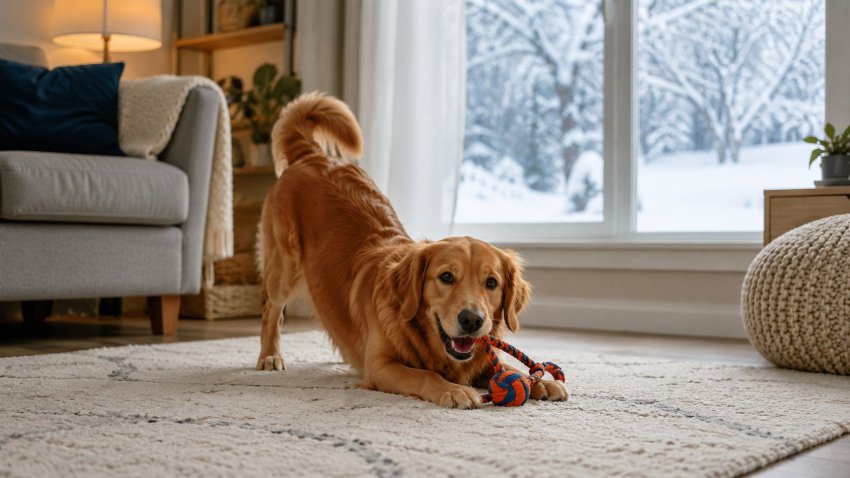
When the weather is freezing, long outdoor walks may not be safe or comfortable for every dog. That can leave dogs with extra energy and owners wondering how to keep them busy indoors.
The good news is that exercise does not always mean running for miles. Dogs also need mental stimulation, training, sniffing, problem solving, and calm play. On very cold days, indoor activities can help your dog burn energy without spending too much time outside.
This article is for general information only. Choose activities that match your dog’s age, size, health, and behavior. If your dog has joint problems, breathing issues, or a medical condition, ask your veterinarian which activities are safe.
For a simple starting point, use our pet care checklist to organize daily care, grooming, safety, and vet needs.
Why Indoor Exercise Matters in Winter
Dogs can become bored when outdoor time is limited. Boredom may lead to barking, chewing, pacing, attention-seeking, or restlessness.
Indoor exercise can help with:
- Extra energy
- Mental stimulation
- Training practice
- Confidence
- Better focus
- Less boredom
- A more relaxed routine
The goal is not to exhaust your dog. The goal is to give your dog a healthy way to use their body and brain.
If outdoor walks are limited because of the temperature, check our guide on how cold is too cold for dogs in Canada.
Start With Short Training Sessions
Training is one of the easiest indoor exercises because it uses mental energy.
Practice simple cues such as:
- Sit
- Stay
- Come
- Down
- Touch
- Leave it
- Place
- Look at me
Keep sessions short. Five minutes of focused training can be more useful than a long, frustrating session.
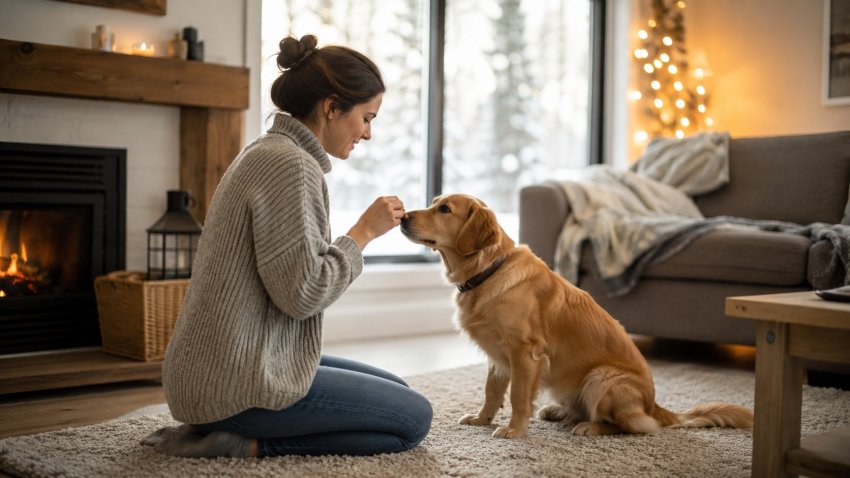
Use small treats or your dog’s regular kibble. End while your dog is still interested.
Play Hide-and-Seek
Hide-and-seek is simple and fun. Ask your dog to stay, then hide nearby and call them. When they find you, reward them with praise or a treat.
Start easy. Hide behind a door, couch, or hallway corner. As your dog learns the game, make it slightly harder.
This game encourages listening, recall, and problem solving.
Try Scent Games
Dogs love using their noses. Scent games are excellent for winter because they can be done in a small space.
Try this:
- Ask your dog to wait.
- Hide a treat under one of three cups.
- Let your dog sniff and choose.
- Reward them when they find the right cup.
You can also scatter a few pieces of kibble in a towel or hide treats around one room.
Keep the game safe and avoid hiding food near wires, furniture gaps, or anything your dog should not chew.
Use Puzzle Toys
Puzzle toys and food-dispensing toys can slow mealtime and keep your dog mentally active.
Good options include:
- Treat balls
- Snuffle mats
- Lick mats
- Puzzle boards
- Stuffed rubber toys
- Slow feeders
Choose a puzzle that matches your dog’s skill level. If it is too hard, your dog may get frustrated.
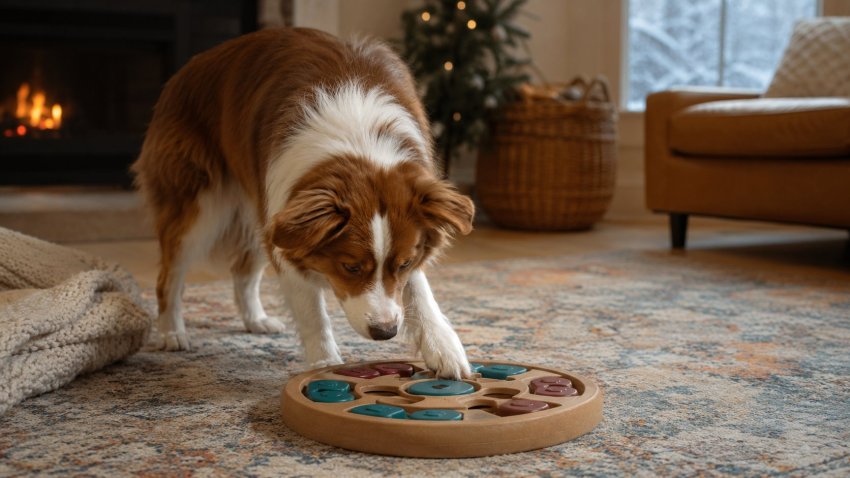
If it is too easy, it may not keep them busy for long.
Indoor Fetch in a Safe Area
If you have enough space, gentle indoor fetch can work well. Use a soft toy, not a hard ball, and choose a safe hallway or open room.
Before playing, remove breakable items and check that the floor is not slippery.
Avoid fast fetch on hardwood or tile floors because dogs can slip. For senior dogs or dogs with joint issues, choose slower games instead.
Tug Games
Tug can be a good indoor activity when played safely. Use a strong dog toy and keep the game controlled.
Teach your dog to release the toy when asked. Stop the game if your dog becomes too rough or overstimulated.
Tug is not about pulling as hard as possible. It should be a fun, structured game.
Create a Simple Indoor Obstacle Course
You do not need fancy equipment. Use household items to create a gentle course.
Ideas:
- Walk around chairs
- Step over a low towel
- Go through a hallway
- Sit on a mat
- Touch a target
- Walk between cones or safe objects
Keep everything low and stable. Do not ask your dog to jump on slippery floors or climb unstable furniture.
Practice “Place” or Mat Training
Teaching your dog to relax on a mat can be helpful during winter, guests, meals, and busy evenings.
Place a mat or bed on the floor. Reward your dog for stepping on it, sitting on it, and eventually lying calmly.
This is not high-energy exercise, but it is excellent mental work.
Use Mealtime as Enrichment
Instead of putting all food in a bowl, turn part of mealtime into a small activity.
You can:
- Use a slow feeder
- Hide kibble in a snuffle mat
- Scatter kibble on a clean rug
- Put food in a puzzle toy
- Practice training cues with kibble
This gives your dog something useful to do without adding too many treats.
Remember Bathroom Breaks Still Matter
Indoor activity does not replace bathroom breaks. Dogs still need short outdoor trips, even in cold weather.
On freezing days, keep bathroom trips quick and safe. Use boots or paw balm if needed, wipe paws after coming inside, and watch for signs your dog is too cold.
You can follow our winter paw care tips for dogs after each quick outdoor trip.
Final Thoughts
Freezing weather does not have to mean a bored dog. Short training sessions, scent games, puzzle toys, gentle fetch, tug, and indoor obstacle courses can keep your dog active and mentally engaged.
Keep activities safe, match them to your dog’s ability, and avoid slippery floors or rough play. A few short sessions throughout the day can make winter much easier for both of you.