

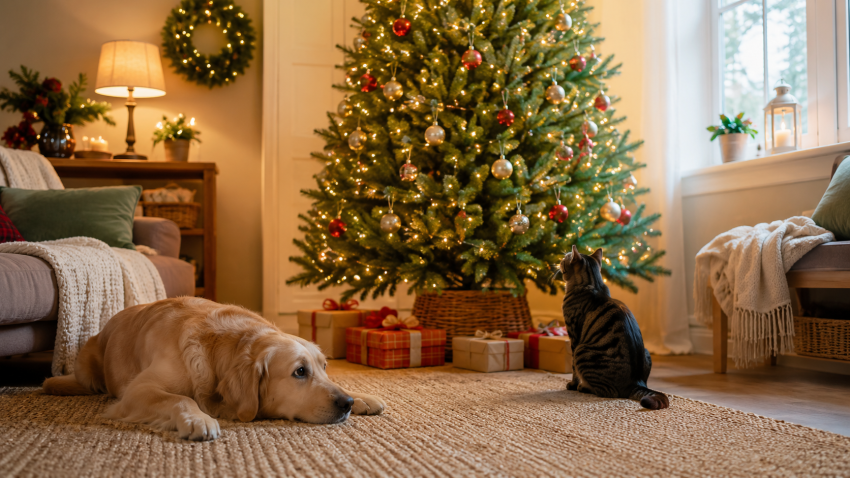
Christmas decorations make a home feel warm and festive, but they can also create new risks for dogs and cats. A shiny ornament can look like a toy. Ribbon can look fun to chew. A Christmas tree can become a climbing challenge for a curious cat.
The goal is not to avoid decorating. The goal is to decorate in a way that keeps your pet safe.
This guide covers common holiday decoration risks and simple ways to make your home safer for dogs and cats.
This article is for general information only. If your pet eats a plant, ornament, ribbon, decoration, or anything unusual, contact your veterinarian or a pet poison helpline.
Start With Your Pet’s Personality
Every pet is different. Some dogs ignore decorations. Others chew anything they find. Some cats only nap under the tree. Others try to climb it on the first day.
Before decorating, think about your pet’s habits:
- Does your dog chew toys, shoes, or household items?
- Does your cat climb shelves or furniture?
- Does your pet steal food or wrappers?
- Does your pet get excited when guests visit?
- Has your pet eaten non-food items before?
A young puppy, kitten, or high-energy pet may need more safety planning than an older pet who leaves decorations alone.
Christmas Tree Safety for Pets
A Christmas tree is often the biggest holiday attraction for pets. It has lights, ornaments, movement, smells, and hanging objects.
To make the tree safer:
- Use a sturdy tree stand.
- Place the tree away from furniture cats can use as a launch point.
- Avoid hanging fragile ornaments near the bottom.
- Keep glass ornaments higher up.
- Use soft or non-breakable ornaments on lower branches.
- Secure the tree if your pet may knock it over.
- Avoid edible decorations like popcorn strings or candy canes.
- Do not let pets drink tree water.
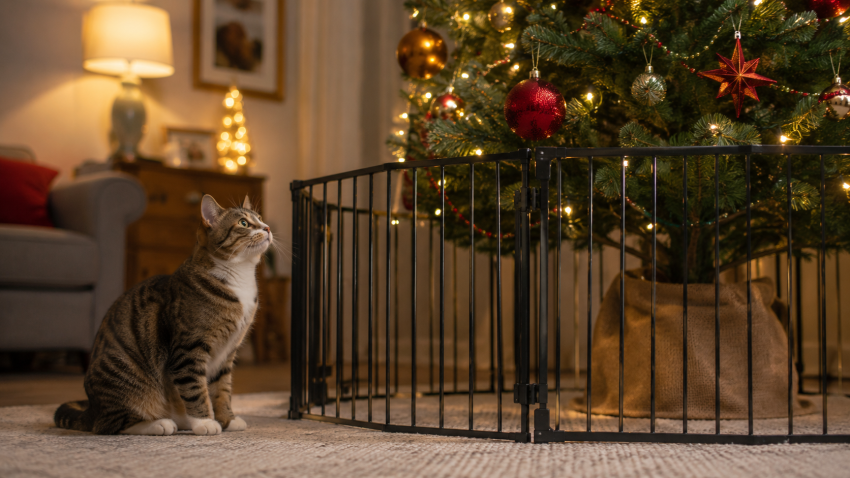
If your pet is very curious, consider using a pet gate or placing the tree in a room you can close when unsupervised.
Be Careful With Tinsel and Ribbon
Tinsel, ribbon, yarn, and string can be especially tempting for cats. Dogs may also chew or swallow them.
These items can become dangerous if swallowed because they may cause choking or digestive problems. It is best to avoid tinsel completely if you have cats or pets who chew.
For gift wrapping, clean up ribbon, string, and small plastic pieces right away. Do not leave wrapped gifts with long ribbons under the tree if your pet might chew them.
Choose Ornaments Carefully
Ornaments can break, cut paws, or become choking hazards. Some may also contain small hooks, batteries, glitter, paint, or sharp edges.
Pet-safe ornament tips:
- Use shatter-resistant ornaments.
- Avoid small ornaments that can fit in your pet’s mouth.
- Skip edible ornaments.
- Use ribbon loops instead of sharp metal hooks when possible.
- Keep sentimental or fragile ornaments high on the tree.
- Check the floor daily for broken pieces.
If your dog likes to wag their tail near the tree, keep the lower branches simple and soft.
Holiday Plants to Watch Around Pets
Some holiday plants can make pets sick, and certain plants are especially dangerous for cats. Lilies should be kept out of homes with cats because even small exposure can be serious.
Other holiday plants to be careful with include holly, mistletoe, and poinsettias. Poinsettias are often not as dangerous as people think, but they can still irritate a pet’s stomach and mouth.
The safest choice is to use pet-safe plants or artificial decorations. If you use real plants, keep them fully out of reach and clean fallen leaves quickly.
Lights and Electrical Cords
Holiday lights can create chewing and burn risks. Some pets may chew electrical cords, especially puppies, kittens, and bored pets.
To reduce risk:
- Tape cords down or use cord covers.
- Keep cords behind furniture where possible.
- Unplug lights when you are not home.
- Avoid leaving pets alone with plugged-in decorations.
- Check cords for bite marks.
- Use battery-operated decorations carefully and keep batteries away from pets.
If your pet chews a cord or seems shocked, contact your veterinarian immediately.
Candles and Scented Decor
Candles can be knocked over by tails, paws, or curious noses. Scented oils and potpourri may also be risky if spilled, licked, or chewed.
Use flameless candles when possible. If you use real candles, place them high, away from pets, and never leave them unattended.
Be careful with strong scents, diffusers, and essential oils around pets. Some animals are sensitive to fragrances, and cats in particular can be more vulnerable to certain substances.
Gift Bags, Wrapping, and Small Pieces
Gift wrap may seem harmless, but pets can chew paper, tape, plastic, twist ties, bows, ribbons, and small toy parts.
After opening gifts, clean the room before letting pets roam freely. Watch for:
- Ribbon
- Tape
- Plastic packaging
- Batteries
- Small toy pieces
- Food gifts
- Chocolate boxes
- Scented products
Holiday gift baskets can be a hidden risk because they often include chocolate, nuts, coffee, alcohol, or dried fruit.
Create a Safe Holiday Zone
If your pet is too interested in decorations, create a holiday-safe area where they can relax. This can be a bedroom, office, crate area, or quiet corner.
Include:
- Fresh water
- Their bed
- Favorite toys
- A litter box for cats
- Calming background noise
- A safe chew or treat puzzle if appropriate
This is helpful when you are cooking, wrapping gifts, hosting guests, or leaving the house.
Final Thoughts
Christmas decorations can be safe and beautiful with a little planning. The main idea is to look at your home from your pet’s point of view. If something shines, swings, smells interesting, makes noise, or looks chewable, your pet may investigate it.
Choose sturdy decorations, avoid risky plants, secure cords, skip tinsel, and keep fragile items away from curious paws. A pet-safe setup can help your home feel festive without creating unnecessary danger for your dog or cat.