

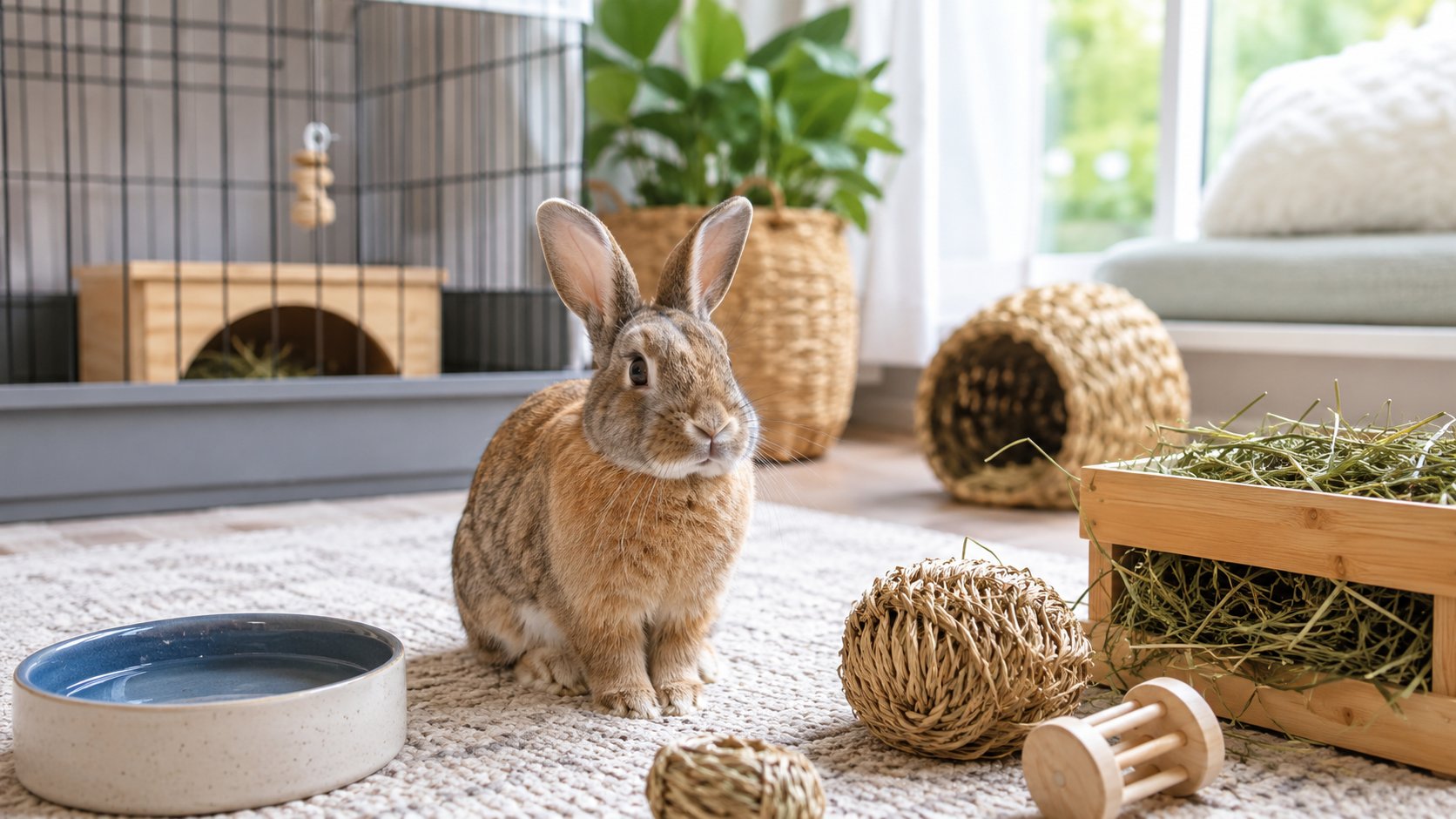
Pet rabbits can live much longer than many new owners expect. With proper housing, a healthy diet, daily exercise, companionship, and regular veterinary care, many pet rabbits live around 8 to 12 years. Some rabbits may live longer.
Quick answer: most well-cared-for indoor pet rabbits live about 8 to 12 years. Lifespan depends on diet, dental health, breed, size, genetics, spaying or neutering, housing, stress level, and access to a rabbit-savvy veterinarian.
Rabbits are not “easy starter pets.” They are long-term companions with specific daily care needs. A small change in appetite, droppings, posture, or behaviour can be important because rabbits often hide illness.
How long do pet rabbits live?
A healthy indoor rabbit commonly lives around 8 to 12 years. Some rabbits may live into their teens, especially when they receive excellent care. Outdoor rabbits or rabbits kept in unsafe housing may have a shorter lifespan because they face more risks from weather, predators, stress, parasites, and injury.
| Rabbit situation | Typical lifespan | Notes |
|---|---|---|
| Indoor pet rabbit | About 8 to 12 years | Often safer with good diet, space, and vet care |
| Outdoor pet rabbit | Often shorter | More risk from weather, predators, stress, and parasites |
| Large breeds | May be shorter | Large breeds can have different health risks |
| Small breeds | May live longer | Care quality still matters more than size alone |
What affects a rabbit’s lifespan?
A rabbit’s lifespan is not controlled by one thing. Several care habits work together to keep a rabbit healthy.
1. Diet and hay
Hay should be the main part of most adult rabbits’ diets. Hay supports digestion and helps wear down teeth. Rabbits’ teeth continue growing throughout life, so the wrong diet can lead to painful dental problems.
Fresh water, rabbit-safe greens, and a controlled amount of quality pellets may also be part of a healthy rabbit diet. Avoid sudden diet changes because rabbits have sensitive digestive systems.
2. Dental health
Dental problems are common in rabbits because their teeth grow continuously. If teeth do not wear properly, a rabbit may stop eating, drool, lose weight, or develop mouth pain.
If your rabbit stops eating or produces fewer droppings, treat it as urgent and contact a veterinarian.
3. Indoor safety
Indoor rabbits are usually safer than outdoor rabbits because they are protected from extreme weather, predators, and many parasites. But indoor homes still need rabbit-proofing.
Cover wires, block unsafe spaces, remove toxic plants, and give your rabbit a safe area to rest, eat, and exercise.
4. Exercise and enrichment
Rabbits need room to move. They should not spend their entire life in a small cage. Daily exercise helps support healthy muscles, digestion, and mental wellbeing.
Give your rabbit tunnels, safe chew toys, hiding spots, cardboard boxes, and supervised time outside the enclosure.
5. Spaying or neutering
Spaying or neutering may reduce certain health and behaviour problems. It can also make bonding with another rabbit easier. Ask a rabbit-savvy vet what is safest for your rabbit based on age and health.
6. Vet care
Rabbits need veterinary care from someone comfortable treating rabbits. Regular checkups can help catch dental issues, weight changes, parasite problems, and other concerns earlier.
Indoor vs outdoor rabbits
Indoor rabbits often have a better chance of living longer because their environment is easier to control. Outdoor rabbits may face cold, heat, damp housing, predators, insects, stress, and less daily observation.
If a rabbit lives outdoors, the housing must be secure, weather-protected, dry, clean, predator-resistant, and large enough for normal movement. Even then, daily checks are very important.
Warning signs your rabbit needs a vet
Contact a veterinarian quickly if your rabbit shows any of these signs:
- Not eating or drinking
- Fewer or no droppings
- Bloated belly
- Drooling or wet chin
- Grinding teeth in pain
- Head tilt
- Weakness or hiding more than usual
- Laboured breathing
- Sudden weight loss
For rabbits, not eating can become serious quickly. Do not wait several days to see if it improves.
How to help your rabbit live longer
- Feed unlimited good-quality hay.
- Provide fresh water every day.
- Use a large, safe living space.
- Give daily exercise outside the enclosure.
- Rabbit-proof your home.
- Offer safe chew toys and enrichment.
- Book regular vet checkups.
- Watch appetite and droppings daily.
- Keep the environment calm and clean.
Final thoughts
Pet rabbits can be loving, funny, and long-term companions, but they need more care than many people expect. A rabbit may live 8 to 12 years or longer, so bringing one home should be a serious commitment.
Good diet, safe housing, regular vet care, exercise, and daily observation can make a big difference in your rabbit’s quality of life.
FAQs About Rabbit Lifespan
How long do pet rabbits live?
Many well-cared-for indoor pet rabbits live around 8 to 12 years. Some may live longer with excellent care.
Do indoor rabbits live longer than outdoor rabbits?
Indoor rabbits often live longer because they are protected from weather, predators, parasites, and many outdoor risks.
What is the biggest health risk for rabbits?
Dental problems and digestive issues are common concerns. A rabbit that stops eating or stops producing droppings needs urgent veterinary advice.
Do rabbits need a vet?
Yes. Rabbits should see a rabbit-savvy veterinarian for checkups and any signs of illness.
Are rabbits good pets for children?
Rabbits can be good family pets, but they are delicate and need gentle handling, daily care, and adult supervision.<
What helps rabbits live longer?
Unlimited hay, fresh water, a safe indoor space, exercise, enrichment, proper dental care, and regular veterinary care can help support a longer life.